KPV — Overview
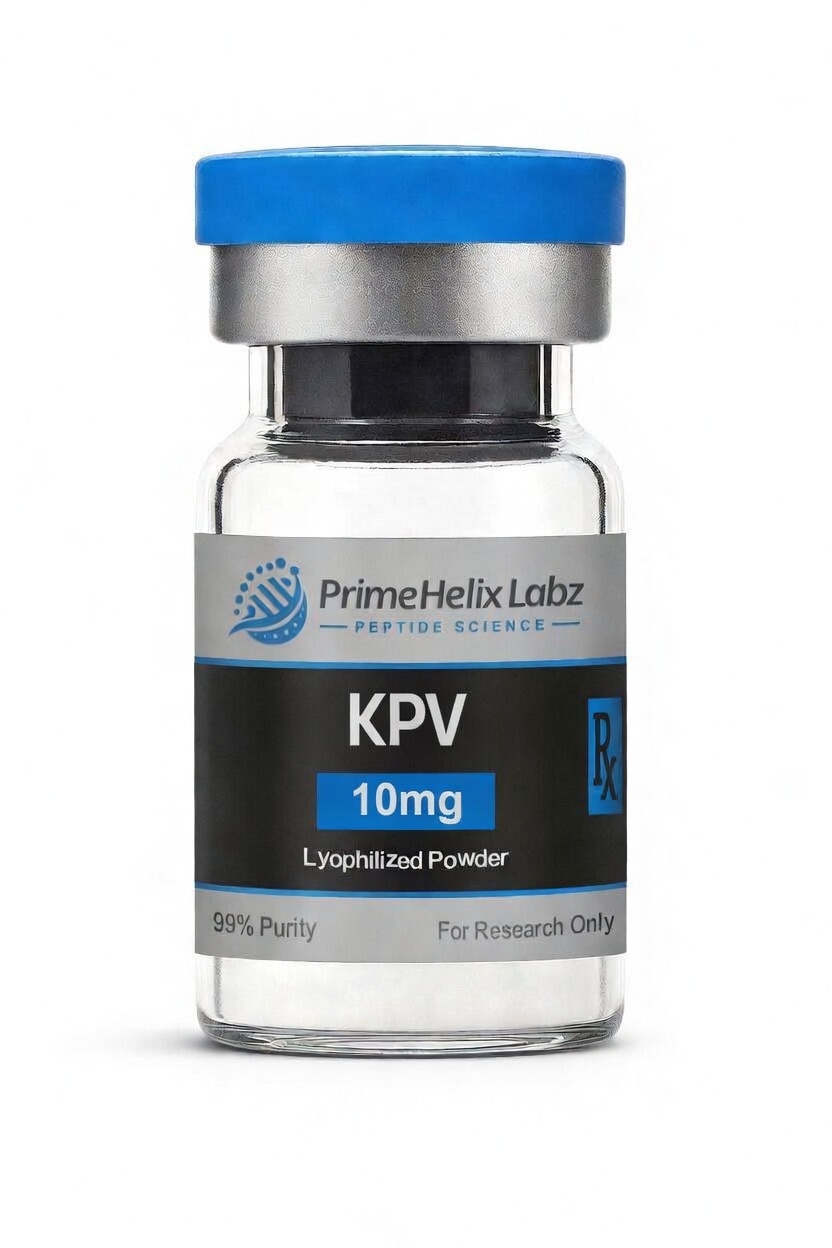
KPV is a short, naturally occurring tripeptide fragment (Lys‑Pro‑Val) derived from the larger pro‑opiomelanocortin (POMC) peptide α‑MSH. It is widely studied for its role in inflammation‑related pathways, cellular signaling, and barrier‑function research. Due to its compact structure and stability, KPV is frequently used in laboratory environments exploring how small peptide fragments influence immune and epithelial responses.
Its simplicity, high solubility, and well‑characterized biochemical behavior make KPV a valuable tool for researchers investigating inflammation‑modulating mechanisms.
Background & Research Interest
KPV is commonly examined in studies involving:
- Inflammatory signaling pathways Research on how small peptides interact with cytokine networks and immune mediators.
- Epithelial and barrier‑function models Used to explore cellular responses in skin, gut, and mucosal environments.
- Melanocortin‑related pathways As a fragment of α‑MSH, KPV is often included in studies examining melanocortin receptor interactions.
- Cellular stress and recovery Investigating how cells respond to environmental or chemical stressors in the presence of short peptide fragments.
- Comparative peptide research Frequently studied alongside α‑MSH, ACTH fragments, and other POMC‑derived sequences.
General Characteristics
- Peptide Type: POMC‑derived tripeptide fragment
- Sequence: Lys‑Pro‑Val
- Form: Lyophilized powder for laboratory research
- Mechanistic Focus: Inflammation‑related signaling and epithelial response pathways
- Solubility: Highly soluble in standard research‑grade solvents
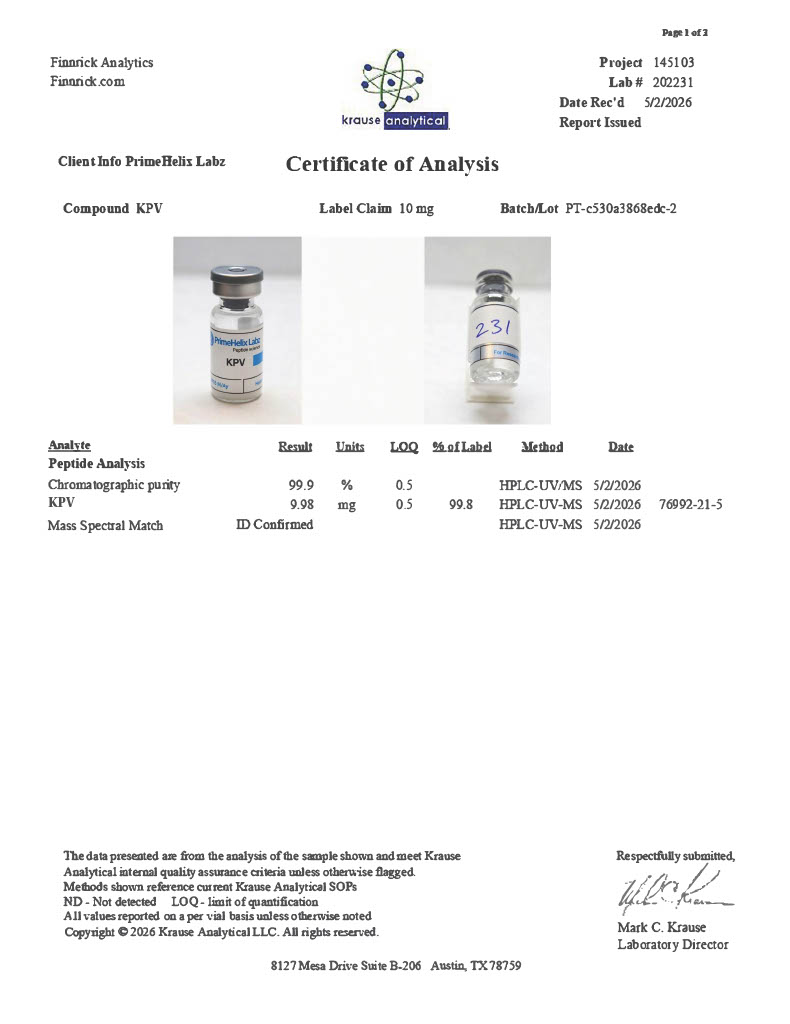
- Purity: Supplied at high purity suitable for controlled experimental use
Research Applications
Laboratory studies often utilize KPV for:
- Inflammation modeling Examining how KPV interacts with cytokines, immune mediators, and inflammatory cascades.
- Barrier‑function research Exploring epithelial integrity, cellular resilience, and response to irritants or stressors.
- Melanocortin system studies Investigating how POMC‑derived fragments influence receptor‑mediated signaling.
- Cellular protection models Assessing how short peptides affect oxidative or environmental stress responses.
Storage & Handling
- Store in a cool, dry environment, protected from light
- Keep vial sealed until use
- Reconstitute only with sterile, research‑grade solvents
- Handle using standard laboratory safety procedures
For laboratory research only. Not for human consumption.