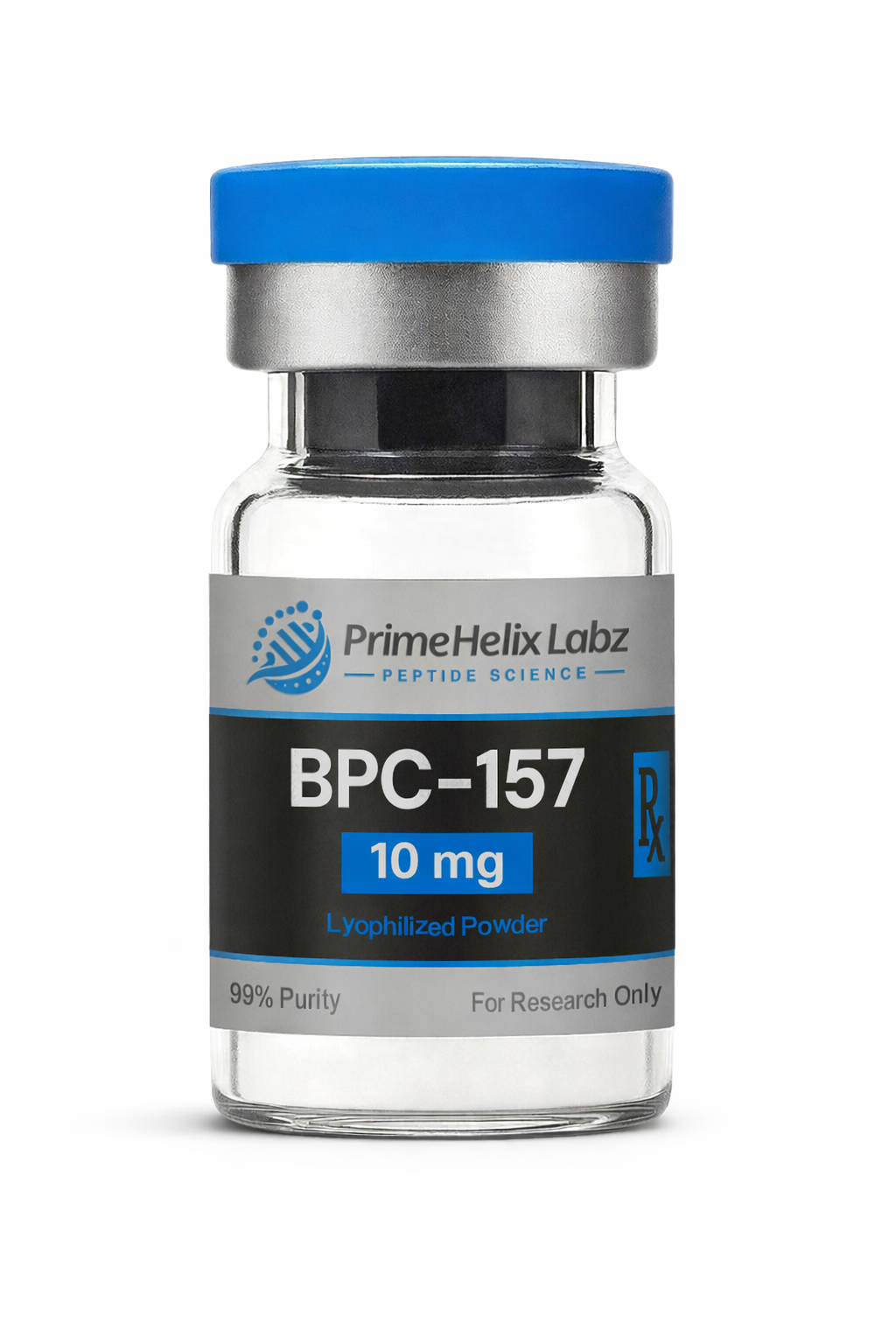
Thymosin Alpha‑1 — Overview
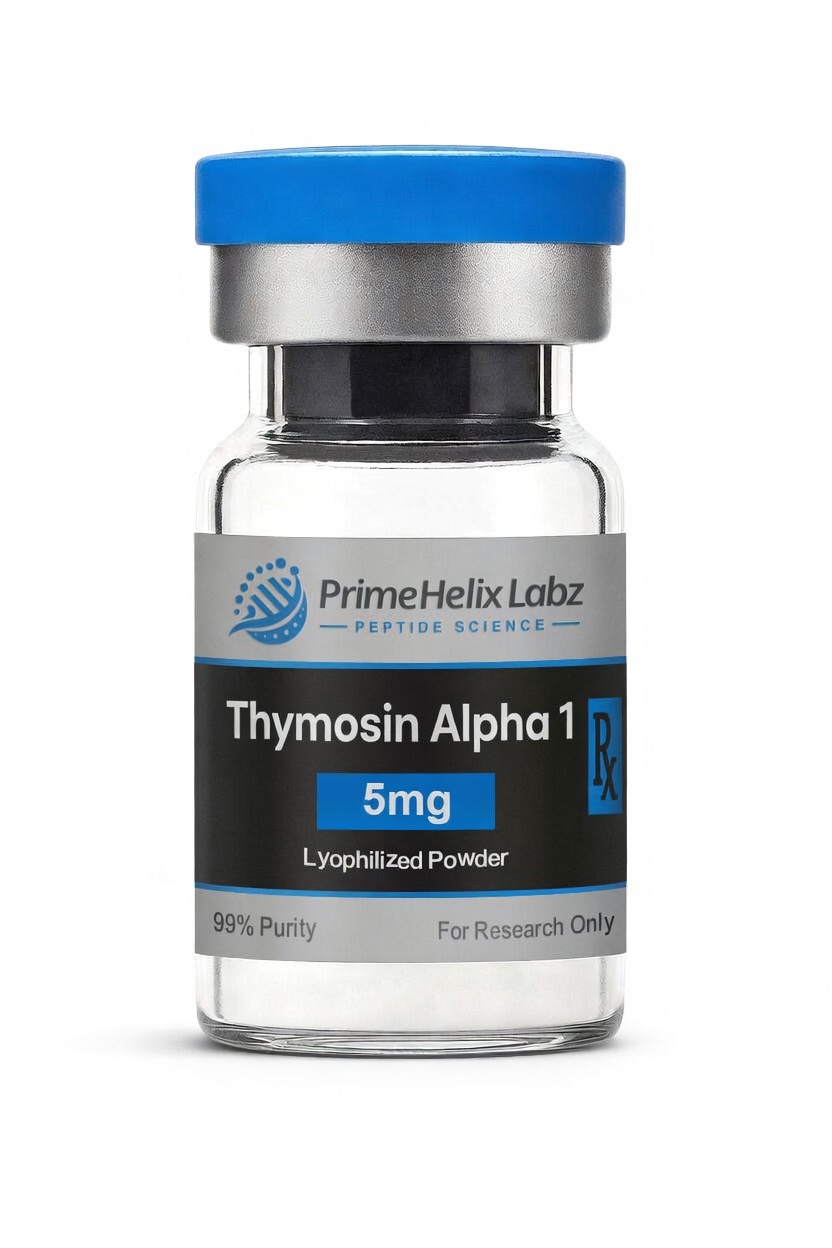
Thymosin Alpha‑1 (Tα1) is a synthetic version of a naturally occurring thymic peptide fragment involved in immune system signaling, T‑cell activity, and innate immune modulation. Originally isolated from thymus gland extracts, Tα1 has become a widely studied research peptide for exploring immune regulation, host defense pathways, and cellular resilience under stress conditions.
Its stability, short sequence, and well‑characterized biochemical profile make it a foundational compound in immunology‑focused laboratory research.
Background & Research Interest
Thymosin Alpha‑1 is frequently examined in controlled research environments studying:
- T‑cell maturation and differentiation
- Innate immune activation pathways
- Cytokine modulation and immune balance
- Stress‑response signaling and cellular resilience
- Interactions between thymic peptides and immune homeostasis
- Comparative studies with other thymic peptides such as Thymalin and Thymosin Beta‑4
Researchers often use Tα1 as a model peptide to investigate how thymus‑derived fragments influence immune system behavior at the molecular level.
General Characteristics
- Peptide Type: Synthetic thymic peptide fragment
- Sequence Length: 28 amino acids
- Form: Lyophilized powder for laboratory research
- Mechanistic Focus: Immune modulation and T‑cell–associated signaling
- Solubility: Typically reconstituted in sterile, research‑grade solvents
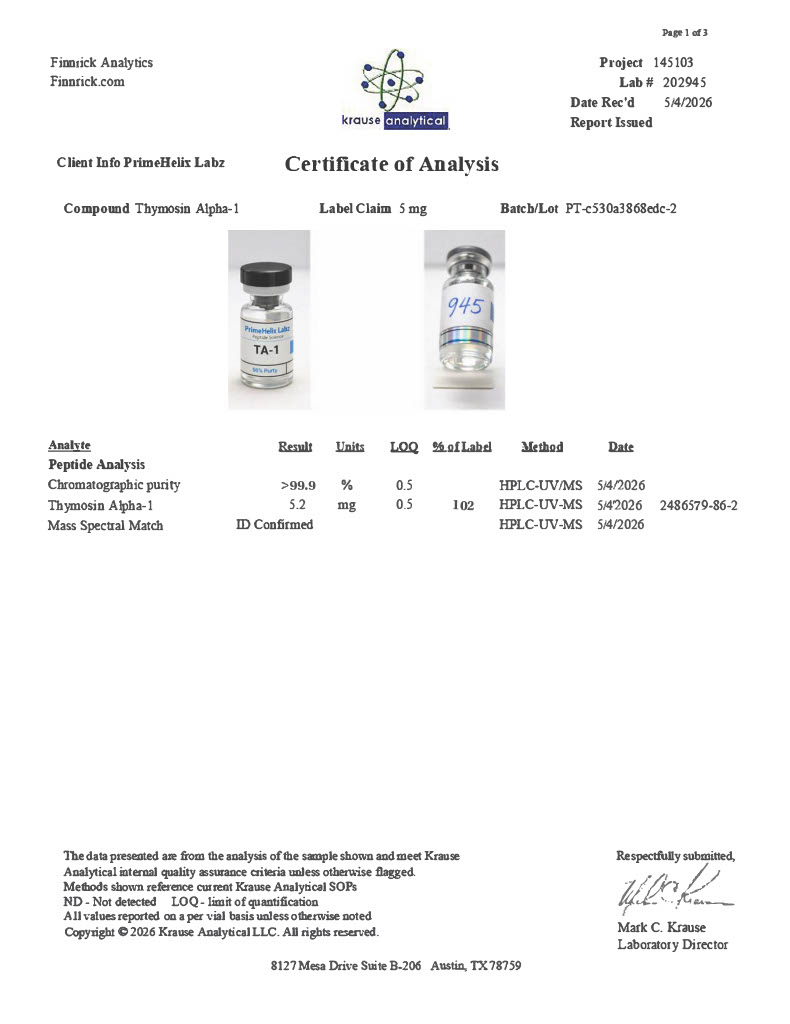
- Purity: Supplied at high purity suitable for controlled experimental use
Research Applications
Laboratory studies commonly explore:
- Immune system modeling Investigating how Tα1 influences T‑cell activation, differentiation, and immune balance.
- Innate immune pathways Examining interactions with dendritic cells, NK cells, and cytokine networks.
- Cellular stress and resilience Studying how thymic peptides affect cellular responses to oxidative or environmental stressors.
- Peptide structure–function relationships Understanding how short peptide fragments regulate complex immune processes.
Storage & Handling
- Store in a cool, dry environment, protected from light
- Keep vial sealed until use
- Reconstitute only with sterile, research‑grade solvents
- Handle using standard laboratory safety procedures
For laboratory research only. Not for human consumption.