
Research Peptides
5-Amino-1MQ 50mg
99.59$50.00View Details
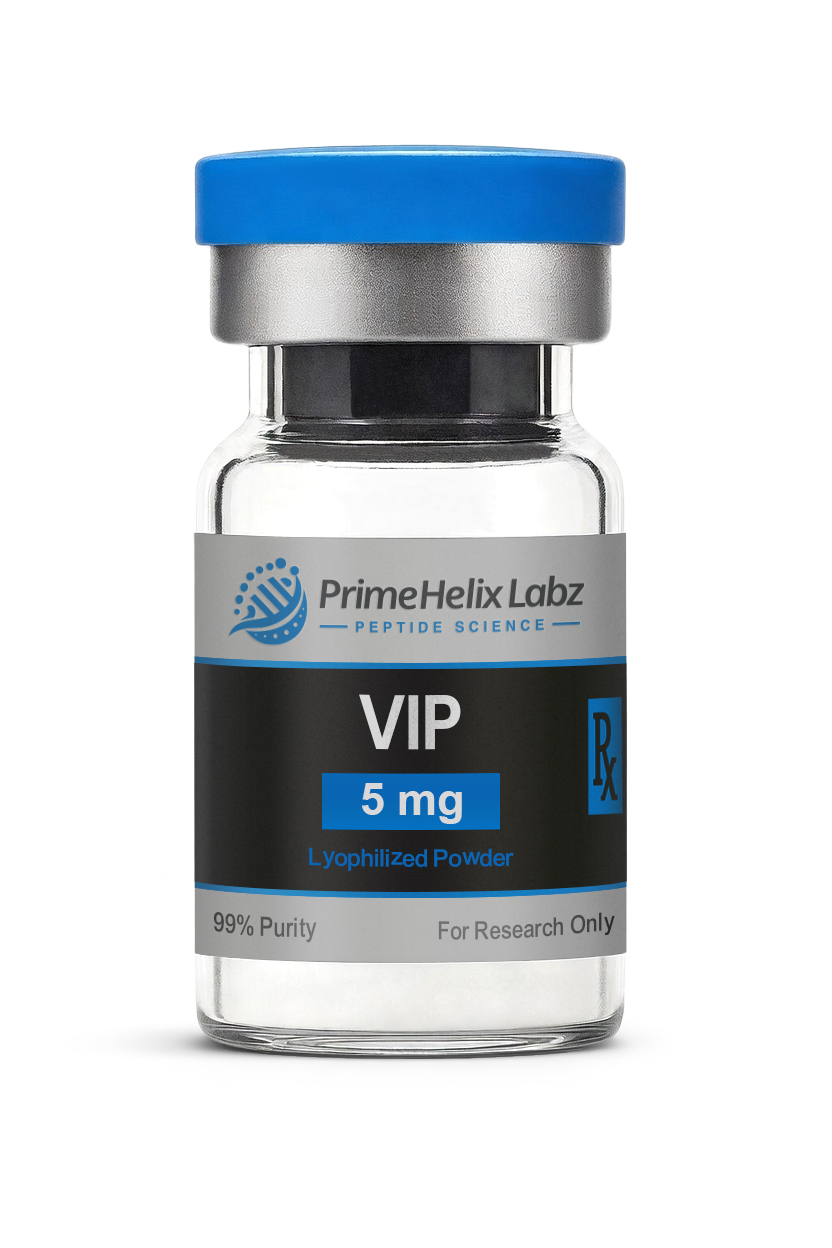
Vasoactive Intestinal Peptide (VIP) is a 28‑amino‑acid neuropeptide belonging to the secretin/glucagon superfamily. It is widely distributed throughout the central and peripheral nervous systems, gastrointestinal tract, and immune tissues, and is known for its potent vasodilatory, anti‑inflammatory, immunomodulatory, and neuroprotective properties.
VIP functions as both a neurotransmitter and neuromodulator, acting on three primary receptors:
These receptors activate cAMP‑mediated signaling pathways, influencing smooth muscle relaxation, epithelial secretion, immune cell behavior, and blood flow regulation.
VIP is released from nerve terminals and acts locally as a neurohormone and paracrine mediator, coordinating responses across multiple organ systems.
| Attribute | Details |
| Peptide Type | Endogenous neuropeptide |
| Length | 28 amino acids |
| Receptors | VPAC1, VPAC2, PAC1 |
| Primary Actions | Vasodilation, anti‑inflammatory signaling, immunomodulation, smooth muscle relaxation |
| Half‑Life | ~1–2 minutes in plasma; ~20 minutes in tissue |
| Molecular Weight | ~3326.8 g/mol |
VIP is commonly studied in models involving:
Its extremely short plasma half‑life makes it a valuable model for studying rapid‑acting neuropeptides and peptide stability.
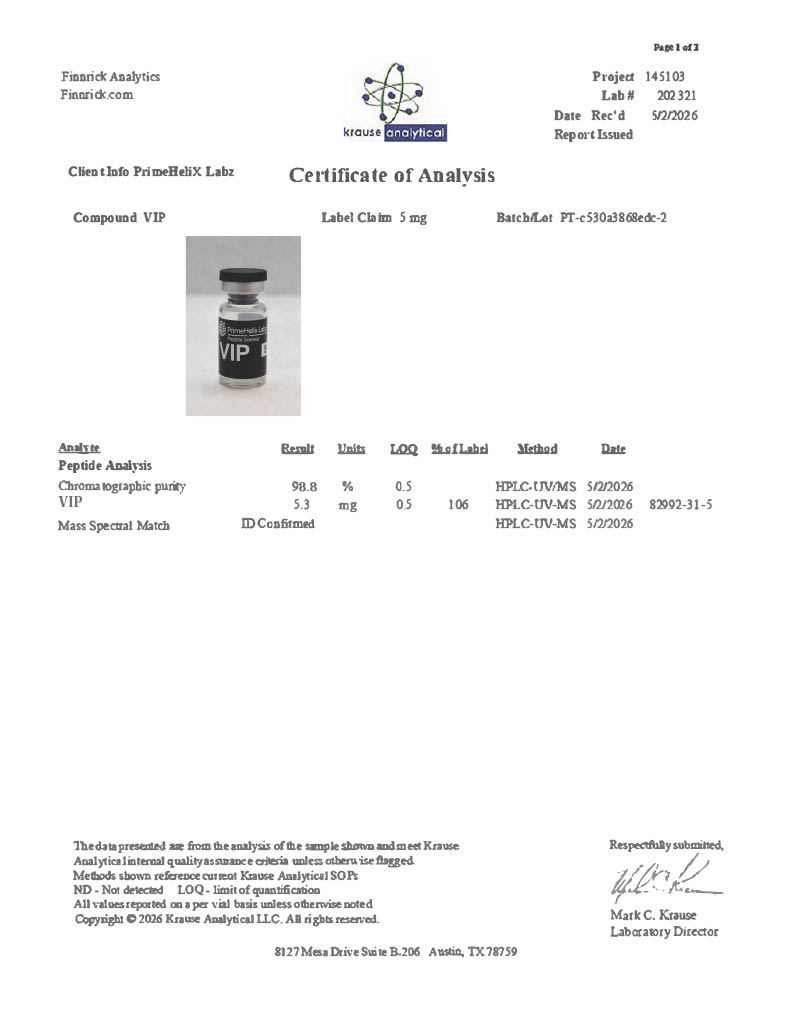
Certificate of Analysis (COA) images are provided for this product.
From verified buyers of VIP 5mg
No reviews yet. Verified buyers can be the first to share their experience.